Transportation services for disabled adults can make the difference between having opportunities available on paper and being able to participate in them in real life. A reliable ride can help an adult get to work, attend an appointment, take part in a day program, visit friends, volunteer, shop, or enjoy community activities.
But “transportation” is not one single service. Public buses, ADA paratransit, Medicaid non-emergency medical transportation, waiver-related transportation, and provider-operated rides have different purposes and rules. Families need to understand those differences before choosing an option.
This guide explains the main transportation choices, the questions families should ask, and the local resources available to adults with disabilities in Richmond and Central Virginia.
Why Transportation Matters Beyond the Ride
Transportation is closely connected to independence, choice, and community participation. An adult may have a meaningful job opportunity, a welcoming social group, or a well-matched support program, but those options are difficult to use without a safe and dependable way to get there.
The right transportation arrangement can support:
- Access to employment and volunteer opportunities
- Attendance at adult day and community-based programs
- Medical and therapy appointments
- Shopping and everyday errands
- Visits with friends and family
- Recreation, civic activities, and faith communities
- Greater choice about how and where a person spends the day
Transportation planning should begin with the individual. Some adults can use a fixed-route bus independently. Others may need travel training, an accessible vehicle, help communicating with a driver, door-to-door assistance, or a familiar support person. A diagnosis alone does not explain what support will make a ride successful.
What Are Transportation Services for Disabled Adults?
Transportation services for disabled adults include public, private, Medicaid-funded, waiver-related, and program-based options that help people travel safely in their communities. The right choice depends on the purpose of the trip, functional needs, eligibility, location, schedule, accessibility, and available funding.
It is helpful to separate two questions:
- Where does the person need to go? This may be work, a medical appointment, a day program, a social event, or another destination.
- What support does the person need during the trip? Consider mobility devices, communication, supervision, navigation, waiting safely, transfers, and changes in routine.
A service that works well for a scheduled medical appointment may not be available for a social outing. A ride that is physically accessible may still be a poor fit if the person needs communication support or cannot safely wait alone. Families should evaluate the complete experience, not only the vehicle.
Common Transportation Options
1. Accessible Fixed-Route Public Transit
Fixed-route transit includes buses and other public transportation that follow established routes and schedules. Under the Americans with Disabilities Act, public transit vehicles and services must meet accessibility requirements.
This may be a good option for someone who can navigate the route independently or with support. Advantages may include predictable routes, frequent service in some areas, and greater flexibility than a ride that must be reserved in advance.
Before relying on fixed-route transit, practice the complete trip. Check the distance to the stop, sidewalk accessibility, street crossings, weather exposure, transfers, travel time, and what the person should do if a bus is delayed or missed. Travel training may help some adults build confidence and learn a route step by step.
2. ADA Complementary Paratransit
ADA complementary paratransit is an origin-to-destination service for people whose disability prevents them from using accessible fixed-route public transportation for some or all trips. It is connected to the local fixed-route transit system and generally operates within a defined area and comparable service times.
Eligibility is based on functional ability—not simply a diagnosis, age, or possession of a disability benefit. The Federal Transit Administration’s ADA guidance explains the federal requirements for complementary paratransit.
In the Richmond region, GRTC CARE provides ADA paratransit for eligible riders within its service area. Families should review current boundaries, application requirements, reservation procedures, fares, and assistance policies directly with GRTC because these details can change.
3. Medicaid Non-Emergency Medical Transportation
Non-emergency medical transportation, often called NEMT, is designed for eligible Medicaid members who have no other way to reach covered healthcare services. According to the Virginia Department of Medical Assistance Services, transportation may be available through a managed care organization or the fee-for-service transportation program, depending on the member’s coverage.
NEMT is not a general ride service for every destination. Virginia’s transportation member FAQ describes it as prearranged, authorized transportation to Medicaid-paid services. Depending on the person’s needs and authorization, transportation may involve a sedan, taxi, wheelchair vehicle, public transit, mileage reimbursement, or another approved mode.
Families should contact the telephone number on the member’s Medicaid or managed care card and confirm eligibility, advance-notice rules, approved destinations, escort policies, mobility needs, and return-trip procedures.
4. Waiver-Related Employment and Community Transportation
Some people receiving Virginia developmental disability waiver services may have transportation addressed through an individual service plan. Virginia’s Employment and Community Transportation information describes transportation that may support access to employment, volunteer activities, community services, and certain community destinations when requirements are met and another transportation source is not available.
Coverage is individual and should never be assumed. Families should speak with the person’s support coordinator and provider about the current waiver, service authorization, documented need, covered destinations, limits, and whether another transportation benefit must be used first.

5. Provider-Operated Non-Medical Transportation
Some adult day programs and disability service organizations provide or coordinate non-medical transportation. Depending on the provider, these rides may support travel to a program, work, appointments, or community activities.
Provider transportation can offer useful continuity when staff understand the person’s communication style, routine, mobility needs, and support plan. However, every organization operates differently. Families should confirm whether transportation is available as a standalone service or only with another program, which areas are covered, and how scheduling and payment work.
6. Family, Private, and Community Options
Family rides, trusted drivers, taxis, rideshare services, volunteer driver programs, and community organizations may also be part of a transportation plan. These choices can add flexibility, but accessibility and support vary widely.
Before using any private option, confirm that the vehicle can safely accommodate the person and any mobility equipment. Also consider whether the driver can provide the level of assistance required. A standard curb-to-curb ride is not the same as a service with trained support.
Non-Medical Transportation and NEMT Are Not the Same
The similar names often create confusion.
Non-emergency medical transportation (NEMT) is tied to eligible healthcare services and specific coverage rules. It may take a Medicaid member to a doctor, therapy, dialysis, or another approved medical service.
Non-medical transportation may support destinations such as work, a day program, shopping, volunteering, social events, or community activities. Its availability and funding depend on the provider, program, benefits, and individual plan.
A provider may offer one, both, or neither. When contacting a transportation service, describe the destination and purpose of the ride instead of asking only whether the organization “provides transportation.”
Questions to Ask a Transportation Provider
Before making a decision, ask specific questions and record the answers:
- Which cities, neighborhoods, and destinations do you serve?
- Is transportation available independently or only for program participants?
- Is the service curb-to-curb, door-to-door, or origin-to-destination?
- Can vehicles accommodate wheelchairs and other mobility devices?
- What securement and transfer assistance can staff provide?
- What training and background screening do drivers receive?
- Can a personal care attendant or companion travel with the rider?
- How are communication needs, sensory preferences, and behavioral support plans addressed?
- How far in advance must rides be scheduled?
- What are the cancellation and missed-ride policies?
- Are rides shared with other passengers, and how long may the trip take?
- How will families be notified about delays or schedule changes?
- What happens if the destination is closed or no one is present at drop-off?
- What safety and emergency procedures are in place?
- What does the ride cost, and which benefits or funding sources may apply?
Ask for policies in writing when possible. If the adult uses a communication device, needs medication nearby, has a seizure or emergency plan, or requires support during transitions, discuss those needs before the first ride.

Preparing for a Successful Ride
A simple, person-centered plan can reduce uncertainty and help the rider know what to expect.
Review the Trip in Advance
Explain where the person is going, who will drive, when pickup should occur, who will meet them, and how the return trip works. Photos, a visual schedule, a map, or a short practice ride may be useful.
Share Essential Information
Provide only the information the transportation team needs to support the rider safely. This may include the person’s preferred name, communication method, mobility assistance, emergency contact, pickup instructions, and signs that they need help or a break.
Prepare for Waiting and Delays
Bring weather-appropriate clothing and any safe comfort or communication items the person chooses. Make sure the rider knows whom to contact and where to wait. Families should understand the provider’s pickup window rather than expecting an exact minute unless the service promises one.
Support Choice and Feedback
After the ride, ask what worked and what should change. Did the rider feel respected? Was the vehicle comfortable? Were instructions clear? Was the waiting time manageable? The adult’s experience should guide future planning.
Transportation and Adult Day Programs
Transportation is an important consideration when comparing adult day programs. A program may be an excellent match, but families still need a realistic plan for arrival, departure, community outings, and schedule changes.
Questions for a day program include:
- Does the program provide or coordinate transportation?
- Which locations and schedules are currently served?
- Is transportation included, billed separately, or funded through an approved service?
- How are late arrivals, absences, and changes communicated?
- What support is available when boarding, riding, and entering the program?
- Are community outings transported by the program, and how is accessibility planned?
Transportation should connect a person to meaningful participation, not dictate every choice in the person’s day. When possible, it should be coordinated with the adult’s goals, preferred activities, work schedule, and natural supports.
Transportation Resources in Richmond, Virginia
Families in Richmond can begin with several official resources:
- GRTC fixed-route services for local public transit information
- GRTC CARE paratransit for ADA eligibility and service information
- GRTC Travel Training for eligible riders who want support learning to use transit
- Virginia Medicaid Transportation Services for eligible healthcare-related rides
Always verify current eligibility, boundaries, schedules, reservations, and costs with the organization providing the ride.
What Smiles Like Yours Confirms About Transportation
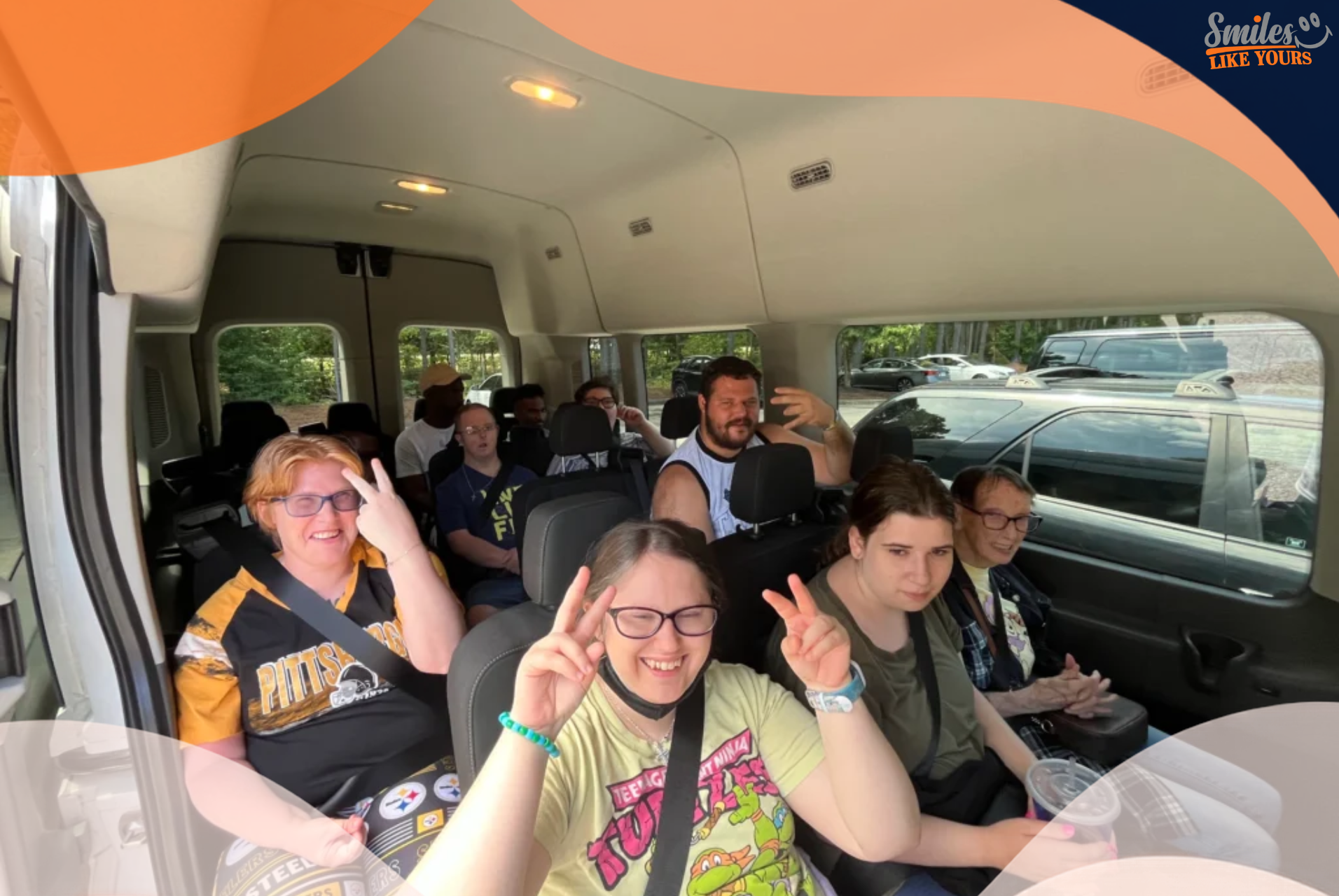
The Smiles Like Yours services page states that the organization offers reliable non-medical transportation in Richmond for appointments, work, and community activities.
Because the website does not publish all operational details, families should contact Smiles Like Yours to confirm current availability, location coverage, vehicle accessibility, eligibility, scheduling, pricing or funding, the level of rider assistance, and whether transportation is connected to another SLY service. Asking these questions ensures that the recommendation matches the person’s actual needs.
Frequently Asked Questions
What transportation options are available for adults with disabilities?
Options may include accessible fixed-route transit, ADA paratransit, Medicaid non-emergency medical transportation, waiver-related transportation, provider-operated non-medical transportation, family rides, and private or community services. Eligibility and availability vary.
What is the difference between paratransit and Medicaid transportation?
ADA complementary paratransit supports eligible people who cannot use fixed-route public transit for some or all trips because of a disability. Medicaid NEMT is for eligible Medicaid members traveling to covered healthcare services when they do not have another suitable way to get there.
Does having a disability automatically qualify someone for ADA paratransit?
No. Eligibility is based on whether a person’s disability functionally prevents use of the fixed-route system under particular conditions. The local transit authority reviews the application and supporting information.
Can Medicaid pay for transportation?
Virginia Medicaid may cover transportation to eligible Medicaid services when program requirements are met. The member should confirm coverage, authorization, reservations, and trip rules with the appropriate Medicaid transportation contact or managed care plan.
What should families ask before scheduling a ride?
Confirm the service area, eligibility, accessibility, reservation process, pickup type, driver assistance, companion rules, costs, funding, communication procedures, and emergency plan. Describe the rider’s needs and the purpose of the trip clearly.
Does Smiles Like Yours offer non-medical transportation?
Yes. The Smiles Like Yours website states that non-medical transportation is offered in Richmond for appointments, work, and community activities. Contact the team to confirm whether the current service is appropriate and available for your family’s situation.
Build a Transportation Plan Around the Person
The best transportation plan is not simply the fastest ride. It is one that is safe, dependable, accessible, understandable, and connected to the adult’s goals.
Begin with the destination and the person’s support needs. Compare more than one option, confirm eligibility and funding, practice the trip when helpful, and invite feedback after each ride. Transportation works best when the adult is treated as an active decision-maker—not just a passenger.
To learn more about adult day support and non-medical transportation in Richmond, contact Smiles Like Yours or begin the intake and tour process.