Dignity of risk means recognizing that adults with developmental disabilities have the right to make informed choices, try new experiences, and learn from outcomes—even when those choices involve reasonable risk. Families and support professionals want to keep people safe. However, removing every opportunity to choose or make mistakes can also limit independence and confidence.
The goal is to create supports that protect well-being while preserving the person’s voice, preferences, and right to grow.
What Does Dignity of Risk Mean?

Dignity of risk is the right to make an informed choice that may involve uncertainty or the possibility of an unwanted result. The Virginia Board for People with Disabilities describes it as part of self-determination: people should be able to make choices and experience both good and bad outcomes.
This principle applies to ordinary decisions. A person may want to prepare a meal, use public transportation, spend their own money, choose friends, attend an event, or try a new job. Each activity carries some risk, but it can also build skills, relationships, and belonging.
Risk is not the opposite of safety. In fact, supported opportunities to practice can make someone safer over time. A person who learns to compare prices with assistance, for example, may become more confident and less vulnerable when shopping independently.
Why Dignity of Risk Matters for Adults with Developmental Disabilities
Adults with developmental disabilities are sometimes protected in ways that reduce their control over daily life. Decisions may be made for them to prevent disappointment, injury, or failure. Although the intention is caring, constant overprotection can create isolation, dependence, and lost confidence.
Meaningful independence develops through experience. It requires chances to communicate preferences, solve problems, recover from mistakes, and discover what works. Disability-rights guidance and a clinical discussion of supported decision-making and dignity of risk emphasize proportionate safeguards instead of automatically replacing the person’s choices.
Respecting dignity of risk also changes the question. Instead of asking, “How do we stop this person from taking any risk?” families and teams can ask, “What support would make this choice safer without taking the choice away?”
Balancing Dignity of Risk With Safety
Dignity of risk does not mean ignoring immediate danger, medical needs, abuse, exploitation, or legal requirements. It means responding to the actual level of risk with the least restrictive support that is effective. These five steps can help.
1. Begin With the Person’s Goal
First, understand what the person wants and why it matters. “I want to take the bus” may represent much more than transportation. It may mean privacy, connection with friends, access to work, or greater control over a weekly routine.
Use the person’s preferred communication method, allow time for questions, and do not assume that a disability prevents someone from expressing a meaningful preference.
2. Make Information Accessible
An informed choice requires understandable information. Explain benefits, concerns, and alternatives in plain language. Visual supports, demonstrations, role-playing, or repeated practice may be more useful than a long explanation.
The purpose is not to pressure the person toward the option others prefer. It is to help them understand the choice and participate as fully as possible.
3. Separate Discomfort From Serious Harm
Sometimes a choice feels uncomfortable because it is unfamiliar, not because serious harm is likely. Be specific: What could happen? How likely and serious is it? Can the risk be reduced?
This distinction helps teams avoid restrictions based only on fear. It also directs attention to genuine concerns that need a clear plan.
4. Use the Least Restrictive Support
Support should match the situation. Someone learning to cook may use adapted utensils, a visual recipe, and nearby staff instead of being excluded from the kitchen. A person learning public transportation might practice the route, carry an emergency contact card, and gradually complete more of the trip independently.
Other supports may include reminders, budgeting tools, check-in calls, safety training, travel practice, or agreed-upon boundaries. The right support acts as a guardrail, not a roadblock.
5. Review What Happened and Adjust
Afterward, ask what went well, what was difficult, and what could change next time. A mistake is not automatic proof that the opportunity should disappear. It may show that a skill or support plan needs adjustment.
Progress is often gradual. The plan should grow with the person rather than becoming a permanent restriction.
Everyday Examples of Dignity of Risk
Dignity of risk can appear in small, practical moments:
- Choosing clothing, meals, activities, or how to spend free time
- Learning to cook with adaptive tools and appropriate supervision
- Managing part of a personal budget with accessible guidance
- Building friendships and romantic relationships with education about consent and boundaries
- Traveling in the community after practicing routes and emergency steps
- Trying a volunteer role or job with coaching instead of waiting until every skill is perfect
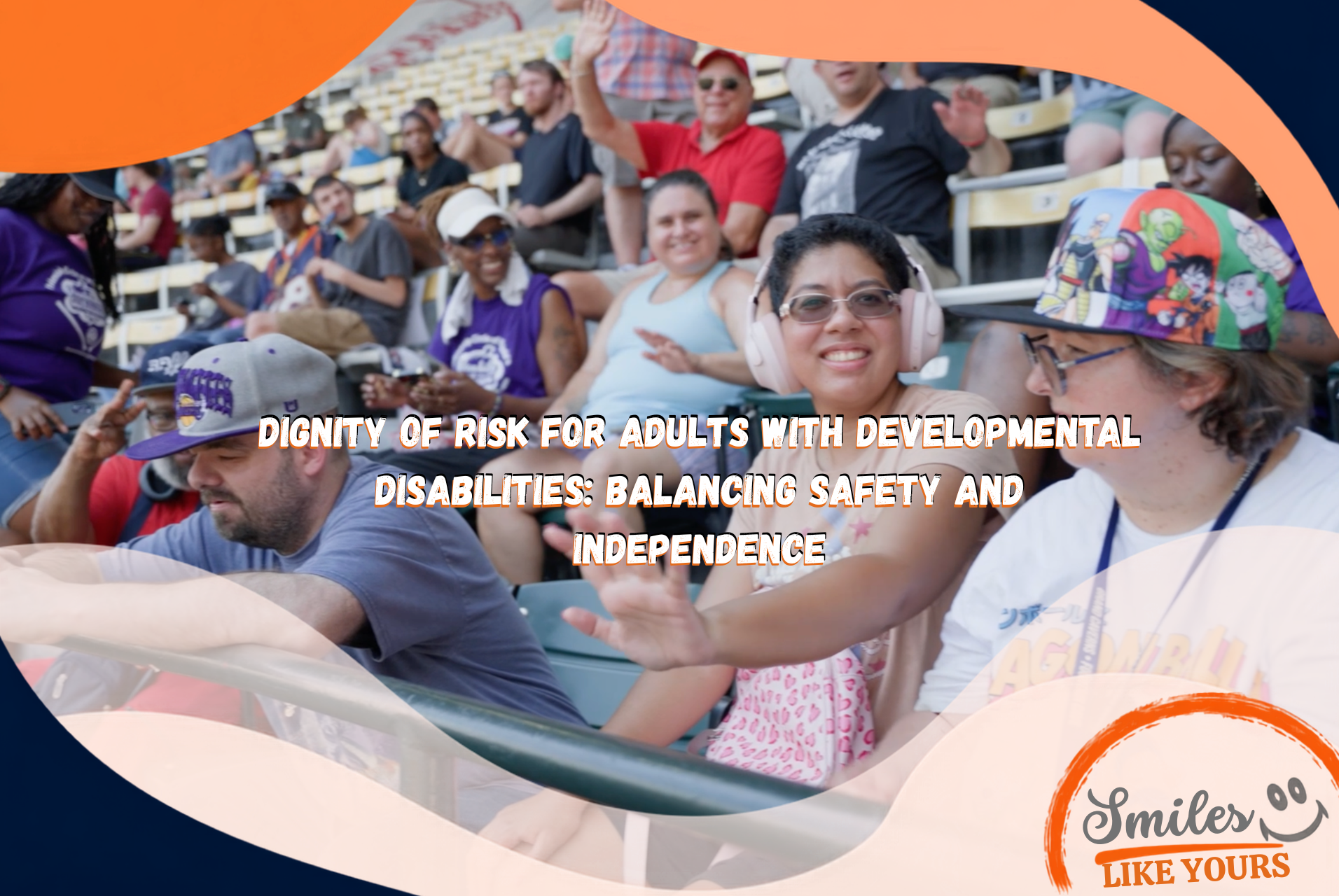
- Attending a new event and deciding afterward whether it was enjoyable
These experiences connect directly to life skills for adults with disabilities. The objective is not independence without support. It is independence with the right support.
How Families Can Support Choice Without Taking Over

Families often carry years of responsibility, advocacy, and concern. Letting go of some control can feel difficult, especially after a negative experience. A gradual approach can help.
Start with a meaningful, relatively low-risk decision. Agree on one or two safeguards, define success from the person’s perspective, and review the experience together.
It also helps to replace “no” with questions such as:
- “What support would help you do this?”
- “What should we do if the first plan does not work?”
- “Who would you like to ask for help?”
- “How can we practice before you try it on your own?”
Most importantly, speak directly to the adult, include them in meetings, and respect their answer whenever possible. Support should expand the person’s role in decision-making, not simply make decisions more efficiently on their behalf.
How Support Programs Can Put Dignity of Risk Into Practice
Strong support programs create real opportunities for choice. Participants can select activities, take meaningful roles, solve problems, and build skills in community settings. Staff can document preferences, teach safety skills, and provide only the assistance needed.
Quality adult day support in Richmond should offer more than supervision. It should build confidence, community connections, and greater control. Programs can partner with families so skills practiced during services carry into daily routines.
Virginia’s human-rights resources reinforce the importance of informed choice while requiring providers to maintain safe service environments. This combination is essential: safety planning should support a meaningful life, not replace it.
Independence Includes the Right to Try
Adults with developmental disabilities deserve the same respect afforded to other adults: the opportunity to choose, learn, change direction, and pursue what matters to them. Dignity of risk does not eliminate support. It makes support more personal, proportionate, and empowering.
When families and providers focus on accessible information, realistic safeguards, skill-building, and the least restrictive option, safety and independence can work together. The result is not a life without risk. It is a life with more voice, experience, connection, and possibility.
To learn how Smiles Like Yours supports choice, community participation, and personal growth, explore our services for adults with developmental disabilities.