September is National Preparedness Month, making it a useful time for families to review how they would respond to a power outage, severe storm, fire, evacuation, or other emergency. For an adult with a developmental disability, a standard household plan may not address communication preferences, sensory needs, medications, mobility equipment, transportation, or changes in routine.
Emergency preparedness for people with disabilities works best when the plan is personal, accessible, and practiced. The adult should be included in decisions as much as possible, and the people who provide support should understand their role before an emergency happens.
This Virginia-focused guide helps families create a practical emergency plan, assemble an individualized kit, prepare for evacuation or sheltering in place, and coordinate with day programs, residential providers, and other members of the support network.
Why Emergency Preparedness May Require Additional Planning
Emergencies can interrupt transportation, electricity, medication access, communication systems, familiar routines, and regular support. These disruptions can affect anyone, but some adults with developmental disabilities may face additional barriers.
Depending on the individual, planning may need to account for:
- Difficulty understanding fast-changing or abstract instructions
- A preference for visual, written, simplified, or device-assisted communication
- Sensory distress caused by alarms, crowds, lights, unfamiliar spaces, or sudden changes
- Mobility needs or accessible transportation
- Medications, medical equipment, or supplies that require electricity or refrigeration
- Dependence on familiar caregivers, direct support professionals, or family members
- Difficulty communicating health information, pain, anxiety, or support needs
- Service animals or emotional support animals
The CDC Emergency Preparedness and Disability Inclusion portal emphasizes that emergencies can happen quickly and that the needs of people with disabilities should be considered throughout preparedness and response.
Virginia has also identified physical, communication, programmatic, and transportation barriers that may place people with disabilities at greater risk during emergencies. A thoughtful plan can reduce confusion and help everyone respond more confidently.
Start With the Person, Not a Generic Checklist
An emergency plan should reflect the adult’s actual routines, abilities, preferences, and goals. Begin the conversation with the person rather than creating the entire plan around them without their participation.
Questions to explore together include:
- How do you prefer to receive important instructions?
- Who helps you feel safe when something unexpected happens?
- Which sounds, lights, crowds, or environments may be overwhelming?
- What items help you stay calm or communicate?
- What medications, equipment, food, or personal care supplies do you need every day?
- How would you leave home if your usual transportation were unavailable?
- Where would you go if you could not return home?
- Who should be contacted if family members cannot be reached?
Use plain language, pictures, maps, demonstrations, or role-playing when helpful. Offer meaningful choices and allow time to process information. This keeps emergency planning consistent with the principles of supported decision-making and person-centered support.
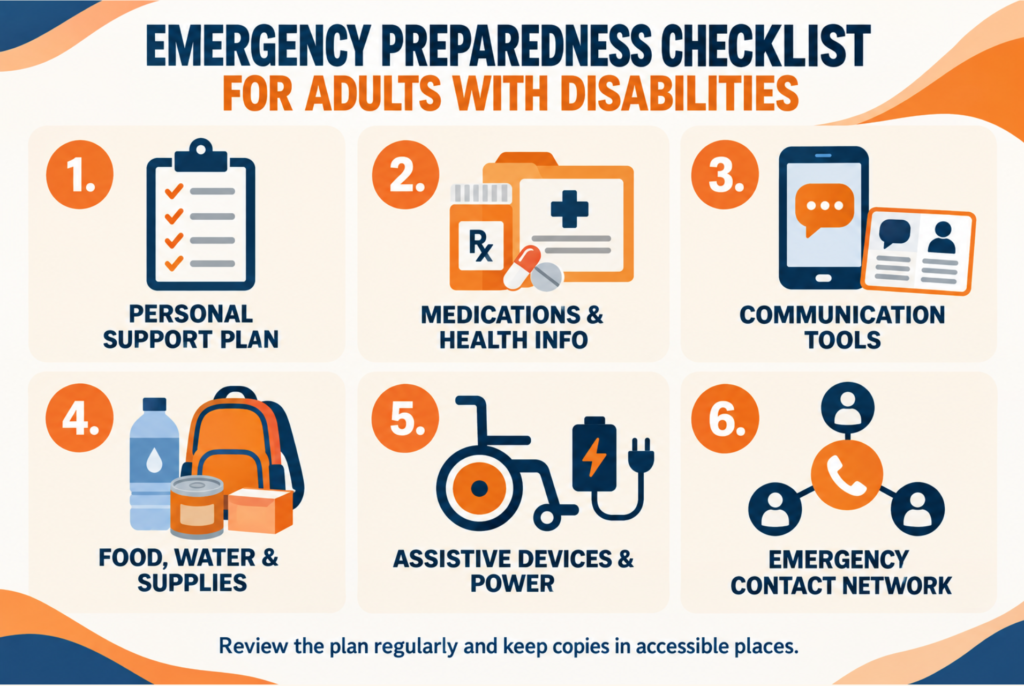
1. Create an Emergency Support Network
A support network is a small group of people who understand the individual’s needs and may be able to help during an emergency. It might include family members, neighbors, friends, direct support professionals, residential staff, a support coordinator, or another trusted person.
Choose more than one contact because the primary caregiver or usual staff member may be unavailable. With the adult’s knowledge and appropriate permission, make sure key people understand:
- How the person communicates
- What type of assistance may be needed
- Where emergency supplies are stored
- Which transportation options are accessible
- Where the person may evacuate
- How medications or essential equipment are managed
- Who has authority to make specific medical or legal decisions, when applicable
Keep a printed contact list in the emergency kit and an electronic copy on a phone or secure device. The list should include at least one contact who lives outside the immediate area, since local phone networks may be affected.
2. Prepare Accessible Communication Tools
During an emergency, first responders or shelter staff may not know how a person communicates. Prepare a short emergency information sheet that can explain essential needs quickly.
Include information such as:
- The person’s name and preferred name
- Preferred communication method
- Simple instructions for using an AAC device or communication board
- Important health conditions, allergies, and medications
- Mobility, personal care, and sensory support needs
- Emergency contacts
- How the person may show pain, fear, or distress
- Strategies that help the person feel calm and understood
Consider laminated communication cards with common phrases, pictures, or symbols. If the person uses a communication device, include chargers, backup batteries, model information, and a low-tech alternative. The Virginia Department of Emergency Management guidance for individuals with disabilities specifically recommends planning how to communicate if assistive equipment is unavailable.
3. Plan for Evacuation and Accessible Transportation
Do not assume that a family’s usual vehicle, public transportation route, or paratransit service will be available during an emergency. Identify several options in advance.
A transportation plan may include:
- A primary and backup driver
- An accessible vehicle when needed
- More than one evacuation route
- A meeting place near home and another outside the neighborhood
- A plan for transporting a wheelchair, walker, communication device, or other equipment
- Contact information for local emergency management and transportation resources
- Arrangements for a service animal and its supplies
The CDC advises families to plan for accessible transportation before an evacuation because the usual option may not be available during an emergency. It also notes that emergency shelters must be accessible to people with disabilities under the Americans with Disabilities Act.
Virginia residents can ask their city or county emergency management office whether a voluntary special needs or access and functional needs registry is available. Families in coastal areas should also review Virginia’s hurricane evacuation zones and local instructions.
4. Organize Medications and Health Information
Prepare a current written list of medications, doses, schedules, allergies, prescribing providers, pharmacy information, and health conditions. Do not rely on memory during a stressful situation.
Talk with the person’s healthcare provider or pharmacist about:
- How much medication can safely and legally be kept in reserve
- What to do if a dose is delayed or missed
- How to store medication during a power outage
- How to transport refrigerated medication
- Backup plans for equipment that requires electricity
- Which medical documents should travel with the person
Medication plans should always follow current instructions from qualified healthcare professionals. Review expiration dates and rotate supplies regularly rather than placing medication in a kit and forgetting about it.
5. Protect Assistive Technology and Mobility Equipment
List every essential device and record the manufacturer, model, serial number, supplier, and basic operating instructions. Take photographs of equipment and store copies of the information in a secure online location as well as the emergency kit.
Depending on the person, useful backup items may include:
- Chargers and labeled cables
- Portable power banks
- Extra batteries for hearing aids or mobility devices
- A manual mobility option, when appropriate and available
- Spare glasses or other vision supports
- Repair supplies for wheelchair or scooter tires
- A low-tech communication board
- Printed instructions for equipment that first responders may need to understand
If equipment is powered, families should discuss safe backup options with the manufacturer, medical provider, utility company, and local emergency management office. Never connect medical equipment to an improvised power source without appropriate guidance.
6. Include Sensory and Emotional Regulation Supports
An emergency kit should support more than physical survival. Unfamiliar surroundings, alarms, crowded shelters, schedule changes, and uncertainty may create intense stress.
Consider including familiar and portable items such as:
- Noise-reducing headphones or earplugs
- Sunglasses or a hat for bright environments
- Fidget tools or another familiar sensory item
- A comfort object
- Preferred shelf-stable snacks that meet dietary needs
- A visual schedule or first-then board
- Downloaded music, videos, or activities that do not require internet access
- A card explaining that the person may need extra processing time or a quieter space
A family can also prepare a short social narrative explaining possible events: an alarm may sound, plans may change, people may move to a safer place, and trusted supporters will explain what happens next.
7. Build a Disability-Inclusive Emergency Kit
Every household needs basic emergency supplies, including water, nonperishable food, flashlights, batteries, first-aid items, sanitation supplies, weather information, and copies of important documents. For an adult with a disability, the kit should also be customized.
Personalized Emergency Kit Checklist
- Emergency contact and support network list
- Personal emergency information sheet
- Medication list and appropriately stored medication supplies
- Copies of identification, insurance information, and essential health records
- Communication cards or backup communication tools
- Chargers, power banks, and necessary batteries
- Assistive technology and equipment information
- Personal care and hygiene supplies
- Dietary and feeding supplies
- Sensory and comfort items
- Change of clothing appropriate for the season
- Supplies for a service animal
- Cash in small denominations
- Printed map, meeting locations, and evacuation information
The Virginia Department of Health emergency preparedness resources include guidance for older adults and people with disabilities, building a kit, hurricanes, and other Virginia emergencies.
8. Practice the Plan in Manageable Steps
A plan is more useful when everyone has practiced it. However, a full emergency drill may be overwhelming for some people. Break practice into smaller, predictable steps.
For example:
- Review pictures of the emergency kit and meeting location.
- Practice finding the contact card.
- Walk calmly to the primary exit.
- Practice using a backup exit on another day.
- Take a short drive along the evacuation route.
- Practice explaining one support need to an unfamiliar person.
- Gradually introduce alarm sounds at a tolerable level when appropriate.
Tell the person what will happen before beginning. Use encouragement, allow breaks, and review what worked afterward. The goal is familiarity and confidence, not perfect performance.
9. Coordinate Plans Across Home, Day Programs, and Community Settings
Many adults receive support in more than one place. A person may live with family or in a residential setting, attend an adult day program, participate in community activities, and travel with several different supporters during the week.
Families can ask each provider:
- How will we be notified during an emergency?
- Where would participants shelter or evacuate?
- How are medications and essential supplies handled?
- What is the reunification procedure?
- How are communication and sensory needs documented?
- How often do staff and participants practice emergency procedures?
- What happens if transportation routes are unavailable?
- How are emergency plans individualized?
Smiles Like Yours supports adults with developmental disabilities through Adult Day Support, Community Engagement, Supported Living Services, and Group Home Services. Each setting has different routines, so sharing current information and asking program-specific questions helps families understand how support is coordinated.

Frequently Asked Questions
What should an emergency plan for an adult with a developmental disability include?
The plan should address communication, medications, medical and assistive equipment, transportation, evacuation destinations, emergency contacts, daily support needs, sensory preferences, and backup caregivers. It should be personalized with the adult’s participation.
How often should the plan be reviewed?
Review it at least twice a year and whenever medications, contact information, living arrangements, transportation, communication needs, equipment, or support providers change. National Preparedness Month is a helpful annual reminder, but the plan should remain current throughout the year.
What if a person becomes overwhelmed during drills?
Break the drill into smaller steps, preview what will happen, use visual supports, practice for short periods, and include preferred calming strategies. Ask the person what would make practice feel safer and more understandable.
Should emergency information be kept private?
Yes. Share personal information only with people who need it and are authorized to receive it. Keep printed documents secure, protect electronic copies, and balance privacy with the need for essential information to be available during an emergency.
Where can Virginia families find official preparedness information?
Families can use resources from the Virginia Department of Emergency Management, the Virginia Department of Health, local emergency management offices, FEMA’s Ready Campaign, and the CDC. Follow local authorities during an active emergency because instructions can vary by location and event.
Preparedness Builds Confidence
Emergency planning should not be based on fear or assumptions about what a person cannot do. A clear and accessible plan can strengthen self-advocacy, help supporters work together, and give the adult meaningful ways to participate in their own safety.
Start with one manageable step: update the contact list, prepare a communication card, check medication information, or practice one evacuation route. Then continue building the plan around the person’s real life.
If your family is exploring person-centered programs for an adult with a developmental disability in Richmond or the surrounding Central Virginia area, review Smiles Like Yours programs and services or schedule a tour and learn how to get started.
This article provides general educational information and does not replace instructions from emergency authorities, healthcare professionals, or an individual’s authorized support plan.