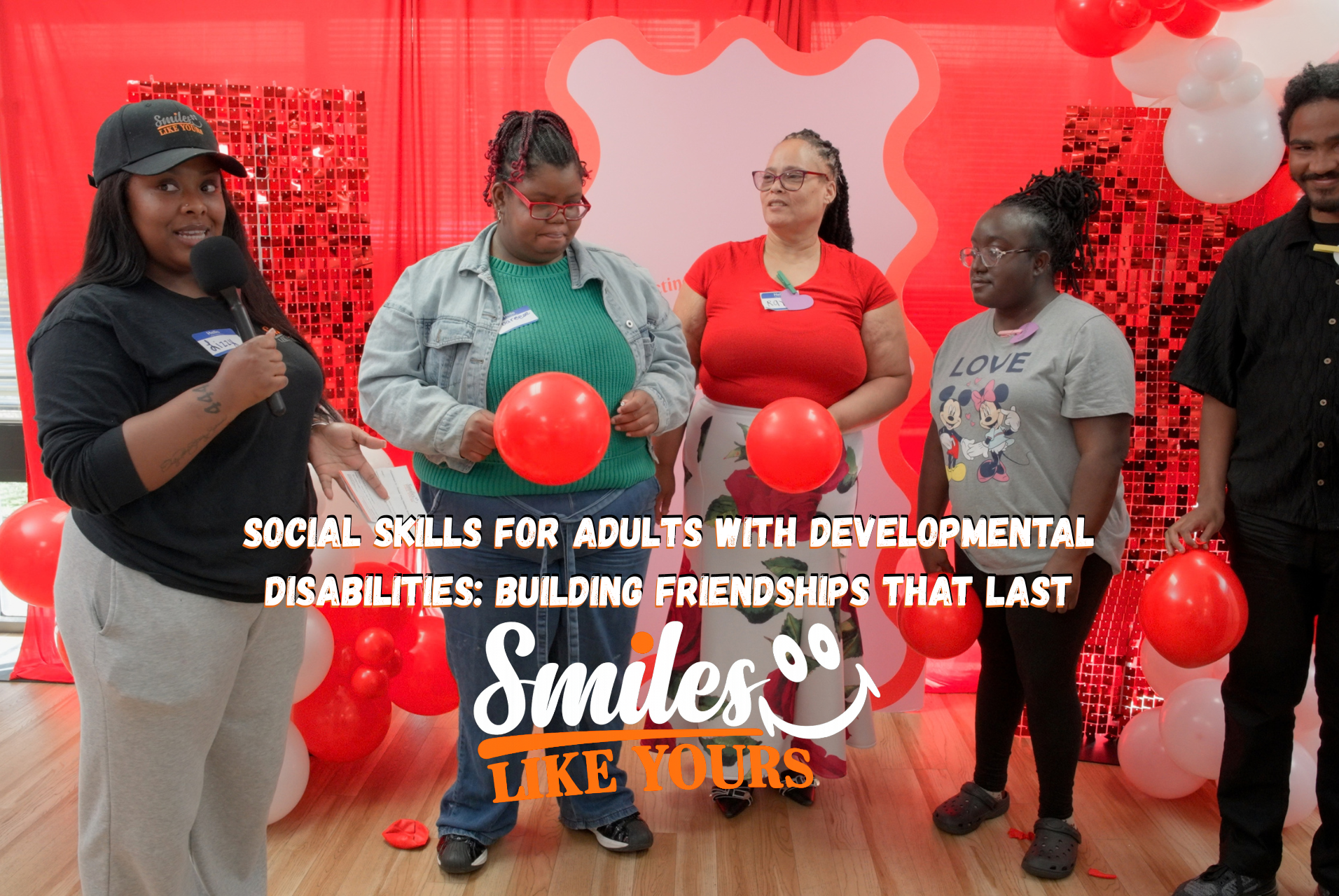
Social skills for adults with developmental disabilities grow through respectful support, real choices, and repeated opportunities to connect. They are not about changing someone’s personality or forcing constant conversation. Instead, they help each person express preferences, understand others, solve everyday social problems, and build relationships in ways that feel authentic.
For families and caregivers, that means looking beyond one-time lessons. Social confidence develops when adults can practice with people they know, try again after an awkward moment, and take part in activities they genuinely enjoy. The goal is not perfection. It is greater comfort, self-advocacy, belonging, and access to meaningful friendships.
Why Social Skills and Friendship Matter in Adult Life
Social connection supports far more than a busy calendar. The Centers for Disease Control and Prevention explains that supportive relationships can strengthen well-being, help people manage stress, and create a sense of being valued and cared for.
Social skills also support everyday independence. Greeting a neighbor, asking for help, joining a group conversation, setting a boundary, or handling a disagreement can make community life easier to navigate. In Virginia, the Department of Behavioral Health and Developmental Services describes community engagement as support that helps people strengthen positive social behavior, interpersonal competence, independence, and access to typical community activities.
Research also connects social communication with wider adult outcomes. A study of a conversation support used during meals found increased conversation engagement among five adults with intellectual and developmental disabilities. Although the study was small, it highlights an important idea: practical supports in natural settings can create more chances to participate.
Start With the Person, Not a Social Checklist

Before choosing a skill to practice, ask what the person wants. One adult may hope to make a close friend. Another may want to feel more comfortable at work, speak up during appointments, or enjoy a hobby group without pressure. Some people prefer a small social circle or need more recovery time after group activities. Those preferences deserve respect.
A person-centered goal is specific and useful. For example, “say hello to one familiar person at art club” is clearer than “be more social.” Likewise, “practice asking a follow-up question during lunch” is easier to support than “improve communication.” Small goals create visible progress and reduce frustration.
Six Practical Social Skills for Adults With Developmental Disabilities
1. Starting a Conversation
Conversation starters work best when they connect to the moment. Practice comments such as “That game looks fun,” “Have you been here before?” or “What kind of music do you like?” A short visual prompt on a phone or card can help when remembering a question is difficult.
2. Listening and Taking Turns
Good conversations include space for both people. Caregivers can model pausing, looking toward the speaker when comfortable, and responding to what was just said. Games, shared meals, and group projects offer natural ways to practice waiting, listening, and taking turns without making the interaction feel like a test.
3. Reading the Situation
Social cues are often indirect, so make them more concrete. Talk through signs that someone is interested, distracted, ready to leave, or uncomfortable. Photos, short videos, and role-play can help. However, avoid teaching that eye contact or one specific body language style is required. Communication differences should be understood, not punished.
4. Expressing Needs and Boundaries
Self-advocacy is a social skill. Adults can practice saying “I need a break,” “Please ask before helping,” “I don’t want to talk about that,” or “Can you explain it another way?” Caregivers should honor these statements whenever possible. Respect builds trust and makes future communication more likely.
5. Handling Disagreements
Friendships include misunderstandings. Practice a simple sequence: pause, name the problem, say what is needed, and suggest a next step. For example: “I was using that. Please give it back, and you can have a turn next.” When emotions are high, taking space before returning to the conversation may be the strongest choice.
6. Staying in Touch
Making a friend is only the beginning. Relationships grow through repeated contact. A calendar reminder can help someone send a message, invite a friend to an activity, or plan the next meeting. Support may also include transportation, accessible communication, or help choosing a safe public place.
Use Real Activities to Build Social Confidence
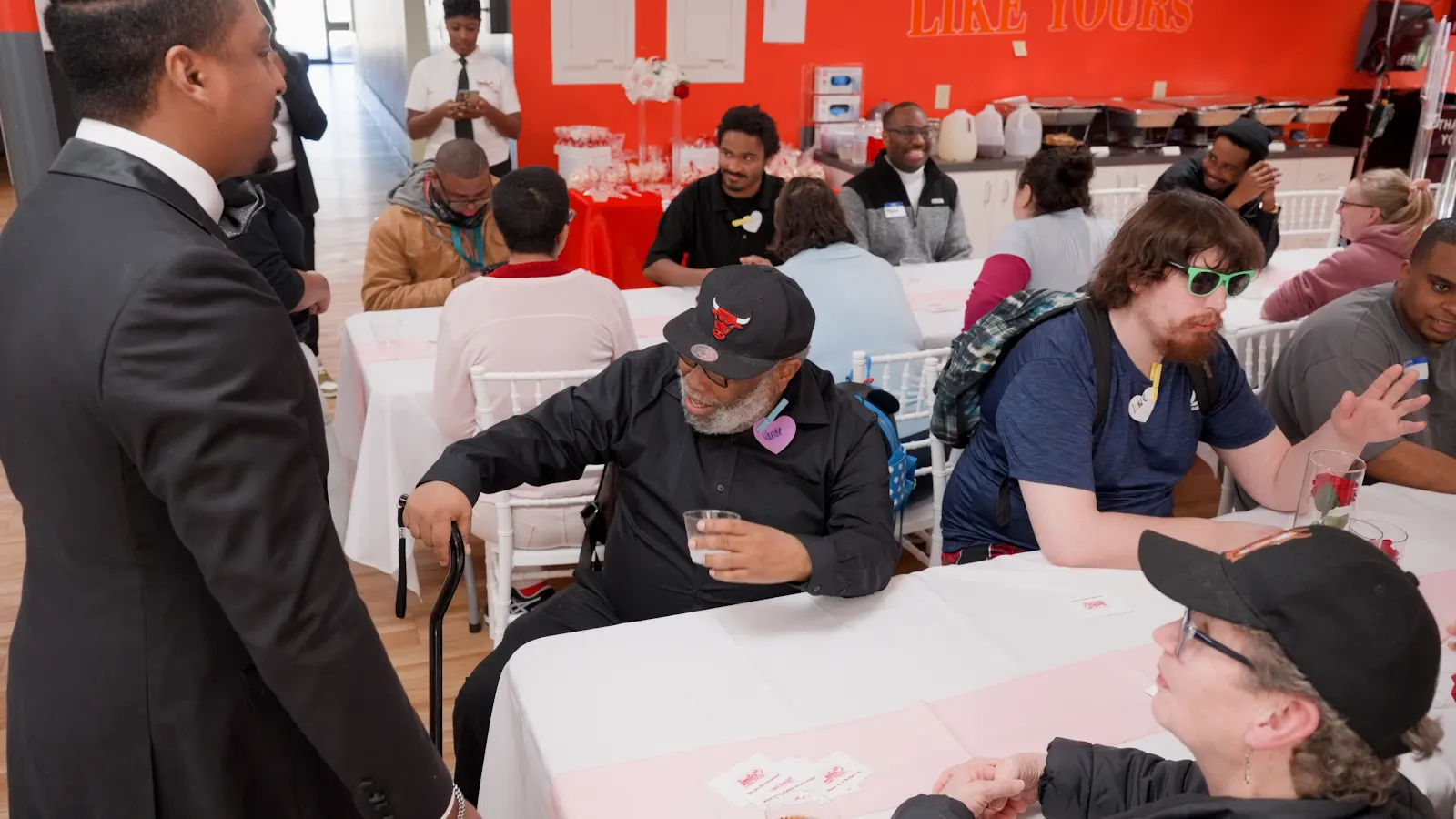
Skills usually become stronger when they are connected to a shared interest. A weekly art class, bowling group, volunteer project, faith community, fitness activity, or game night creates a reason to talk and brings the same people together over time. Familiarity can make conversation easier and allow trust to develop gradually.
The setting matters, too. A loud or crowded event may make participation difficult, while a smaller group with a predictable routine may feel welcoming. Ask what worked afterward: Was the activity enjoyable? Was there enough time to respond? Did the person want more support, less support, or a different environment next time?
At Smiles Like Yours, the Adult Social Club and Adult Day Support program combines group activities, life-skills practice, recreation, and community outings. The Community Engagement program creates additional opportunities to participate in local events, volunteer, explore interests, and build relationships through real-world experiences.
How Families and Caregivers Can Help Without Taking Over
The most helpful support is often quiet and temporary. Before an activity, review what to expect and agree on a signal for help. During the activity, allow enough time for the adult to speak and respond. Step in only when support is wanted or safety requires it. Afterward, focus on what felt good before discussing what might be tried differently.
It also helps to create repeated opportunities with the same people. A one-time event can be enjoyable, but consistent participation gives acquaintances time to become friends. Whenever possible, exchange contact information with consent, schedule the next activity, and support communication in the format the person prefers.
Finally, measure progress by quality, not by the number of conversations. One trusted relationship may matter more than a large social network. A successful outing may mean joining for 20 minutes, asking one question, setting a boundary, or choosing to leave when overwhelmed.
Building Meaningful Connections in Richmond, Virginia
Social skills for adults with developmental disabilities become meaningful when they lead to choice, participation, and relationships. With patient practice, accessible environments, and the right level of support, adults can strengthen communication while staying true to who they are.
Families in Richmond, Chesterfield, Henrico, Midlothian, and nearby communities can explore upcoming Smiles Like Yours activities and events or view real moments from programs in the community gallery. If you would like to learn which option may fit your loved one’s goals, schedule a tour and start a conversation with the Smiles Like Yours team.