For many families, the question of independent living for autistic adults brings both hope and uncertainty. An adult may want more privacy, control over their routine, and a home of their own while still needing help with meals, transportation, medication, communication, safety, or unexpected changes.
Independent living does not have to mean doing everything alone. It can mean making meaningful choices, directing support, developing skills, and living in a setting that balances autonomy with the right level of assistance.
There is also no single checklist that can declare someone “ready.” A better question is: What living arrangement and supports would help this person live safely, confidently, and in a way that reflects their own goals?
This Virginia family readiness guide explains the areas worth exploring, how supported living differs from group home care, and how to plan a gradual, person-centered transition.
Begin With the Adult’s Own Vision
Housing decisions affect nearly every part of daily life. Whenever possible, the autistic adult should participate meaningfully from the beginning.
Ask questions such as:
- Where would you like to live?
- Would you prefer living alone, with a roommate, or with other residents?
- Which routines are important to you?
- How much quiet time and social time feels comfortable?
- What would you like to do independently?
- When and how would you like staff or family to help?
- Which neighborhoods, people, stores, activities, or transportation routes matter to you?
- What would make a new home feel safe and familiar?
Answers may be communicated through speech, writing, pictures, a communication device, gestures, observation, or supported conversation. Some people need to tour several settings or try new responsibilities before they can express a preference.
Respect the language each person prefers. This article uses “autistic adult” because it matches the search language families frequently use, but some individuals prefer “adult with autism” or another description.
What Does Independent Living Mean?
Independent living can describe many arrangements. One adult may lease a private apartment and receive scheduled support. Another may share a townhome with a roommate and have staff nearby. Someone else may live in a staffed group home because consistent assistance gives them greater freedom to participate in everyday life.
Independence should not be measured only by how many tasks a person completes without help. It can also include:
- Choosing what to eat, wear, or do
- Directing another person to provide assistance
- Using reminders, visual supports, or assistive technology
- Recognizing when help is needed
- Participating in decisions about staff and services
- Controlling personal space and possessions
- Building routines that reflect personal preferences
- Staying connected with friends, family, and the community
Virginia’s Home and Community-Based Services requirements emphasize privacy, dignity, community access, autonomy, and individual choice. These principles apply even when a person needs substantial daily support.
A Readiness Guide, Not a Pass-or-Fail Test
The following areas can help families identify strengths, support needs, and skills to practice. Needing assistance in one or several areas does not disqualify someone from a more independent life. It helps define the support plan.
1. Daily Routines and Personal Care
Consider how the person currently manages:
- Waking up and preparing for the day
- Bathing, dressing, grooming, and using the restroom
- Preparing meals and eating safely
- Laundry and caring for clothing
- Cleaning and maintaining a comfortable space
- Following bedtime routines
- Managing changes in energy, sleep, or health
Look beyond whether a task is completed. Ask what type of support works: a written checklist, pictures, phone reminders, adaptive equipment, verbal prompts, demonstration, hands-on assistance, or staff completing selected steps.
2. Food, Shopping, and Household Tasks
Living away from the family home often adds responsibilities that were previously shared or completed by someone else.
Useful practice may include:
- Planning simple meals
- Making a grocery list
- Comparing prices and completing a purchase
- Storing food safely
- Using kitchen appliances
- Recognizing when household supplies are running low
- Reporting a maintenance problem
- Sorting mail and keeping important documents
Choose priorities based on the person’s actual goals. Someone does not need to master an arbitrary list of recipes or chores before exploring housing.
3. Communication and Asking for Help
A person should have reliable ways to communicate preferences, discomfort, needs, and emergencies.
Explore whether the adult can, with appropriate supports:
- Contact a trusted person or staff member
- Describe or show what is wrong
- Ask for clarification or additional time
- Decline an activity or request privacy
- Communicate with a landlord, neighbor, provider, or medical office
- Use a phone, communication device, alert system, or visual tool
- Identify which situations require immediate help
Every staff member should understand the person’s communication style. Communication differences should never be mistaken for a lack of choice or understanding.
4. Health and Medication Support
Health planning should be individualized and reviewed with qualified professionals. Questions may include:
- Who schedules and tracks appointments?
- How will the person travel to healthcare visits?
- Does the person take medication independently, with reminders, or with direct support?
- Can they communicate pain, illness, side effects, or changes in well-being?
- Which allergies, dietary needs, seizure plans, or other health information must staff know?
- Where will medical information and emergency contacts be kept?
Smiles Like Yours describes medication management and healthcare-related assistance as available within its supported living model. The exact scope must be confirmed during assessment and support planning.
5. Safety Without Unnecessary Restriction
Safety planning should reduce real risks while preserving dignity and autonomy.
Discuss:
- Fire alarms, evacuation, and severe weather
- Door, key, and visitor routines
- Kitchen and appliance safety
- Internet, phone, financial, and relationship safety
- What to do after becoming lost or missing transportation
- How staff respond when the person does not answer a scheduled check-in
- Sensory overload, anxiety, elopement, shutdowns, or other individualized concerns
- Which restrictions, if any, are truly necessary and how they will be reviewed
The goal is not to eliminate every risk. Adults without disabilities make everyday choices that involve risk, and autistic adults deserve opportunities to learn, decide, and grow with appropriate safeguards.
6. Money and Benefits
Housing readiness also includes a realistic financial plan. Identify who will help with:
- Rent, utilities, food, transportation, and personal expenses
- Banking and paying bills
- Protecting against scams or financial exploitation
- Medicaid, Social Security, or other benefits
- Rental assistance and housing applications
- Budgeting for activities and unexpected costs
Virginia DBHDS provides housing resources for adults with developmental disabilities, including information about rental housing and the State Rental Assistance Program for people who meet applicable requirements. Housing and support services may have different funding sources, so families should not assume that approval for one automatically pays for the other.
For legal, benefits, tax, or financial planning, seek advice specific to the person’s circumstances.
7. Transportation and Community Life
A home is only as useful as the life a person can reach from it. Consider transportation to:
- Work, volunteering, or day programs
- Medical appointments
- Grocery stores and errands
- Friends, family, faith communities, and social activities
- Parks, libraries, restaurants, and preferred recreation
Create a primary transportation plan and a backup. Practice actual routes, pickup procedures, payment methods, and what to do after a delay or cancellation.
Also evaluate the neighborhood itself. Noise, lighting, traffic, walkability, nearby construction, crowds, and distance from familiar places may affect comfort and accessibility.
8. Social Connection, Privacy, and Boundaries
Moving can create freedom, but it can also increase isolation. Ask how the person will maintain existing relationships and develop new ones without being required to socialize constantly.
Discuss:
- Preferred amount of time alone
- Visits from family and friends
- Roommate compatibility
- Shared-space expectations
- Dating, relationships, consent, and privacy
- Community activities based on genuine interests
- How the person can resolve disagreements or request a change
For some adults, private living space combined with optional shared activities offers a helpful balance. Others prefer a smaller household with more regular interaction.
Supported Living or Group Home: Which Environment Fits?
The best option depends on the person’s preferences, assessed needs, desired routine, and authorized supports.
| Area | Supported Living | Group Home Services |
|---|---|---|
| Living arrangement | Often an apartment or shared home with greater control over personal routines | A staffed home shared with a small number of residents |
| Support pattern | Scheduled, on-site, or responsive support based on the model and individual plan | Consistent on-site staffing, including round-the-clock support in the SLY model |
| Daily structure | Usually greater flexibility and responsibility for directing one’s routine | More built-in structure and staff availability |
| Strong potential fit | Adults who want their own space and can manage some responsibilities with support | Adults who benefit from frequent assistance, predictable staffing, and a structured home environment |
| Questions to examine | Check-in schedule, overnight response, household responsibilities, transportation, and emergency support | Privacy, roommate compatibility, routines, personal choice, staffing, and community access |
Do not choose based only on a label. Tour the actual residence, meet the team, understand the staffing model, and compare the environment with the person’s sensory, communication, health, mobility, and relationship needs.
What Supported Living Means in Virginia
Virginia Medicaid defines Supported Living Residential Service as skill-building, routine support, general support, and safety support that helps an eligible person live successfully in home and community settings. Depending on the approved plan, activities can relate to daily living, community resources, transportation, health, medication, behavior support, and safety.
The service is covered under Virginia’s Family and Individual Supports and Community Living waivers when authorized as necessary in the person’s Plan for Supports. Waiver eligibility does not automatically guarantee this service, a particular provider, a residence, or an opening.
Virginia currently has three DD Waivers:
- Building Independence (BI): for adults who can live mostly independently and do not need support all the time
- Family and Individual Supports (FIS): for children and adults who may live with family, friends, or in their own homes and need functional, behavioral, or medical supports
- Community Living (CL): for children and adults who may require continuous support, including staffed residential options
Families can review the Virginia Medicaid DD Waivers page and contact their local Community Services Board to learn about eligibility and the application process. Virginia reports a waiting list, with waiver slots assigned according to urgency of need.
How to Build Readiness Gradually
A move does not have to begin with a sudden change of address. Families can use smaller, real-world experiences to learn what works.
- Let the adult take greater control of one routine at home.
- Practice preparing meals, shopping, laundry, or scheduling with the supports they would use after moving.
- Create a weekly budget for real expenses.
- Practice transportation to regular destinations.
- Visit different housing models more than once.
- Use an overnight visit or trial experience when a provider offers one.
- Develop a written or visual emergency plan.
- Introduce staff gradually and document effective communication strategies.
- Review what the adult liked, disliked, or wants changed after every visit.
- Update the plan as skills, preferences, and support needs change.
Progress may be uneven. A person can gain skill in one area while continuing to need direct assistance in another. The goal is a sustainable life, not a performance of independence.
15 Questions to Ask During a Housing Tour
Bring these questions to a tour or planning meeting:
- How will the adult participate in choosing the home and roommates?
- What support is available during the day, evening, overnight, and on weekends?
- How quickly can staff respond outside scheduled hours?
- How are communication preferences documented and honored?
- How do residents control their schedules, meals, visitors, and personal space?
- What help is available with medication and healthcare appointments?
- How are transportation and community activities arranged?
- How do you support sensory needs and requests for quiet time?
- What happens during a staffing change or callout?
- How are emergencies, severe weather, and evacuations handled?
- How do you prevent unnecessary restrictions while supporting safety?
- How are roommate disagreements or requests to move addressed?
- What costs are included, and which expenses are separate?
- Which waiver, referral, assessment, authorization, and funding requirements apply?
- How will the adult, family, Support Coordinator, and provider review whether the arrangement is working?
Independent and Supported Living at Smiles Like Yours
Smiles Like Yours offers residential options for adults with developmental disabilities in Richmond and surrounding Central Virginia communities.
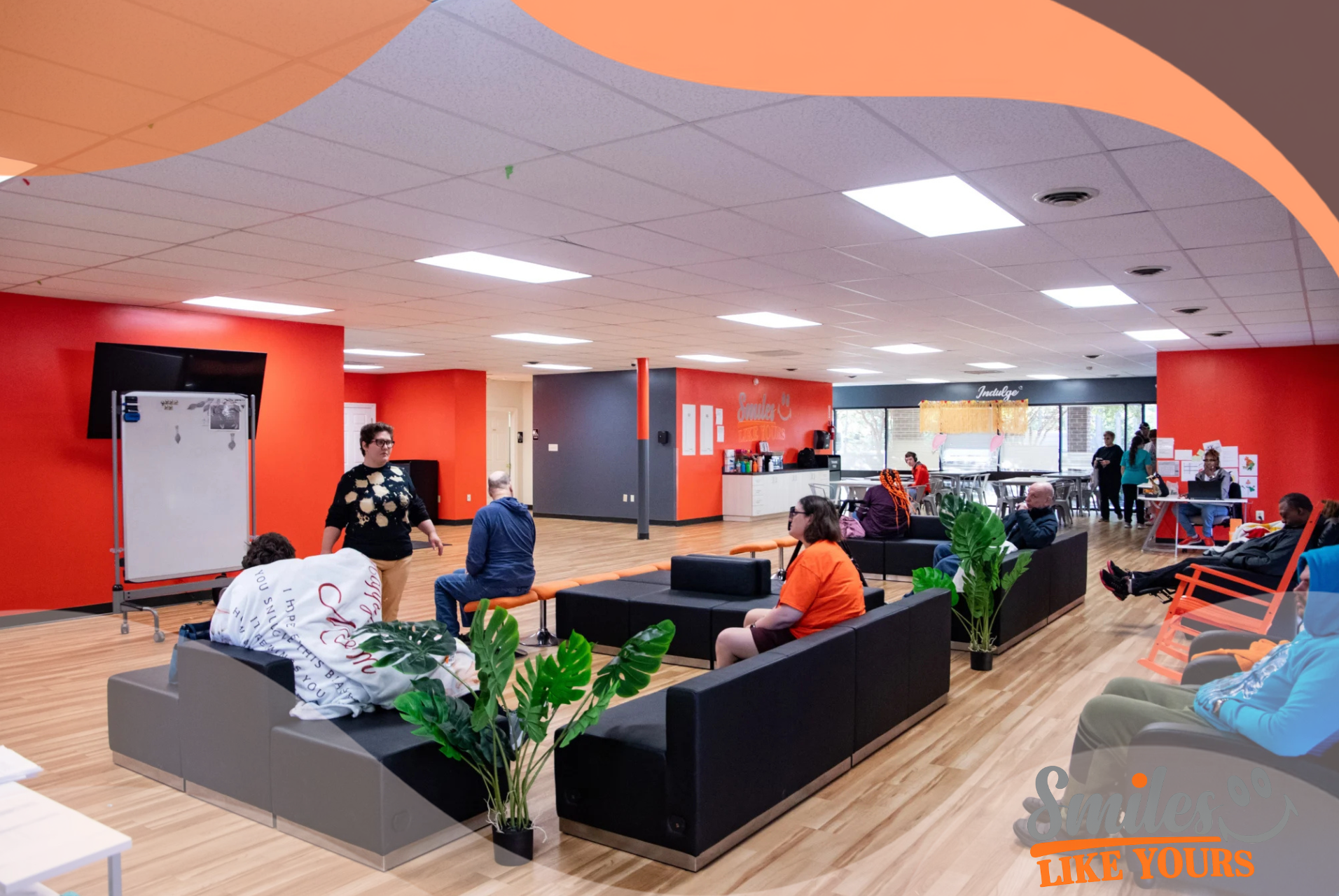
Supported Living Apartments provide individual living space, common areas, community activities, and support with safety and daily needs. SLY currently describes apartment options in Scott’s Addition and Chesterfield, with models and amenities that vary by location.
Group Home Services provide a structured home environment with 24/7 support for adults who need more consistent assistance with daily living, health management, and community participation.
SLY also presents Supported Living Services for adults living independently or semi-independently who need personalized help with areas such as medication, transportation, groceries, and daily routines.
These services support adults with developmental disabilities generally. Families seeking support for an autistic adult should ask SLY directly whether the person’s needs, preferences, eligibility, and funding match a current program. No housing model is appropriate based on a diagnosis alone.
The process begins with a tour and conversation about goals. When applicable, a Support Coordinator submits a referral, followed by assessment, admissions, and development of an individualized support plan. Availability, service area, funding, waiver authorization, staffing, and start dates must be confirmed directly.
Frequently Asked Questions
Can an autistic adult live independently?
Yes, many autistic adults live in their own homes, with support ranging from occasional assistance to regular or on-site services. The right arrangement depends on the person’s preferences, communication, daily living needs, health, safety, finances, and available support—not diagnosis alone.
Does independent living mean living without support?
No. Independent living can include staff assistance, family support, technology, reminders, transportation, medication support, and help with household responsibilities. Independence includes having choice and direction over one’s life.
How do we know whether an adult is ready to move?
Do not rely on a single score or checklist. Identify the person’s goals, current strengths, areas requiring support, preferred environment, and how those supports will be delivered. Tours, real-world practice, gradual transitions, and professional assessments can provide better information than an abstract test.
Is supported living the same as a group home?
No. Supported living commonly offers greater control in an apartment or shared home with individualized support. A group home generally provides a shared, staffed environment with more consistent structure. Specific models vary, so families should compare actual staffing, privacy, routines, responsibilities, and emergency coverage.
Can a Virginia DD Waiver pay for supported living?
Supported Living Residential Service can be covered under Virginia’s FIS and CL waivers when the person meets requirements and the service is authorized in the Plan for Supports. Waiver eligibility does not guarantee every service or provider. Confirm the individual’s situation with the Support Coordinator, Virginia Medicaid, and the prospective provider.
Does Smiles Like Yours specialize in autism housing?
Smiles Like Yours states that its residential programs serve adults with developmental disabilities. Families of autistic adults should contact the team for an individualized discussion rather than assume that diagnosis alone determines eligibility or program fit.
Build the Support Around the Life the Person Wants
Independent living for autistic adults should not be framed as a final test of whether someone can manage alone. It is an ongoing process of matching a person’s goals with an accessible home, reliable relationships, effective support, and meaningful community life.
Begin with the adult’s voice. Practice real responsibilities with the tools and assistance they will actually use. Compare homes by privacy, choice, staffing, transportation, safety, relationships, and quality of life—not by appearances alone.
If your family is exploring Supported Living Apartments, Supported Living Services, or Group Home Services in Central Virginia, schedule a tour with Smiles Like Yours. Meet the team, see the environment, discuss the person’s routines and goals, and involve the Support Coordinator in confirming the appropriate referral and funding pathway.
This article provides general educational information and is not medical, legal, financial, benefits, eligibility, housing, or case-specific advice. Programs, waiver rules, funding, service areas, availability, and requirements may change. Confirm current information with Virginia Medicaid, DBHDS, the individual’s Support Coordinator, qualified professionals, and Smiles Like Yours.