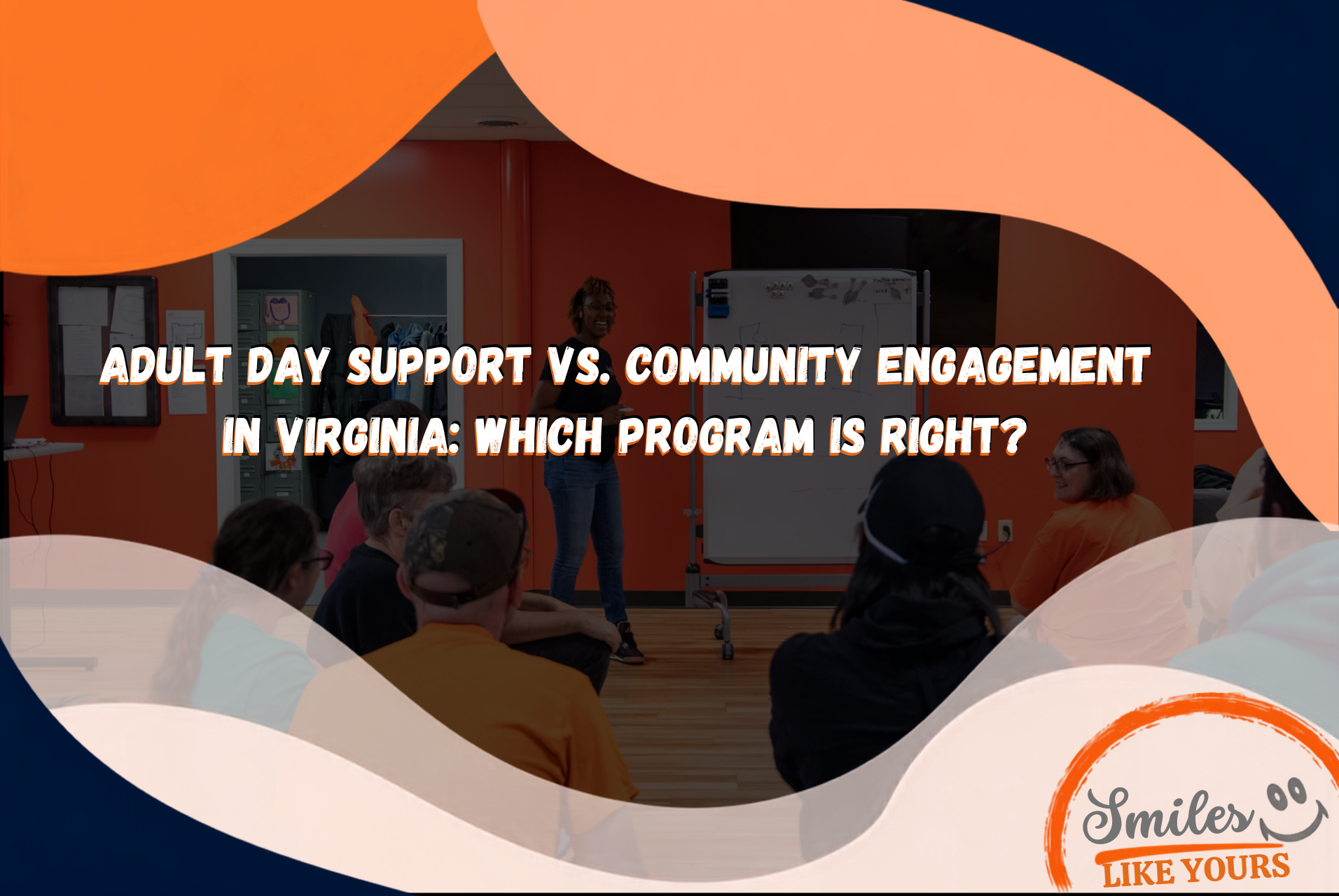
When families compare adult day support vs. community engagement in Virginia, the names can sound similar. Both options may help adults with developmental disabilities build skills, develop relationships, make choices, and participate more fully in everyday life. The main difference is how and where those goals are pursued.
Adult day support typically provides a consistent daytime routine with group activities, skill-building, social opportunities, and planned community experiences. Community engagement places the wider community at the center of the service, using real places, events, volunteer opportunities, and everyday interactions as learning environments.
Neither option is automatically better. The right fit depends on the adult’s goals, interests, communication style, preferred pace, support needs, schedule, and Individual Support Plan. Some people may benefit from one model, while others may be authorized to use a thoughtful combination.
This guide explains the differences families should understand, the questions they should ask, and how Smiles Like Yours approaches both options in Central Virginia.
What Is Adult Day Support?
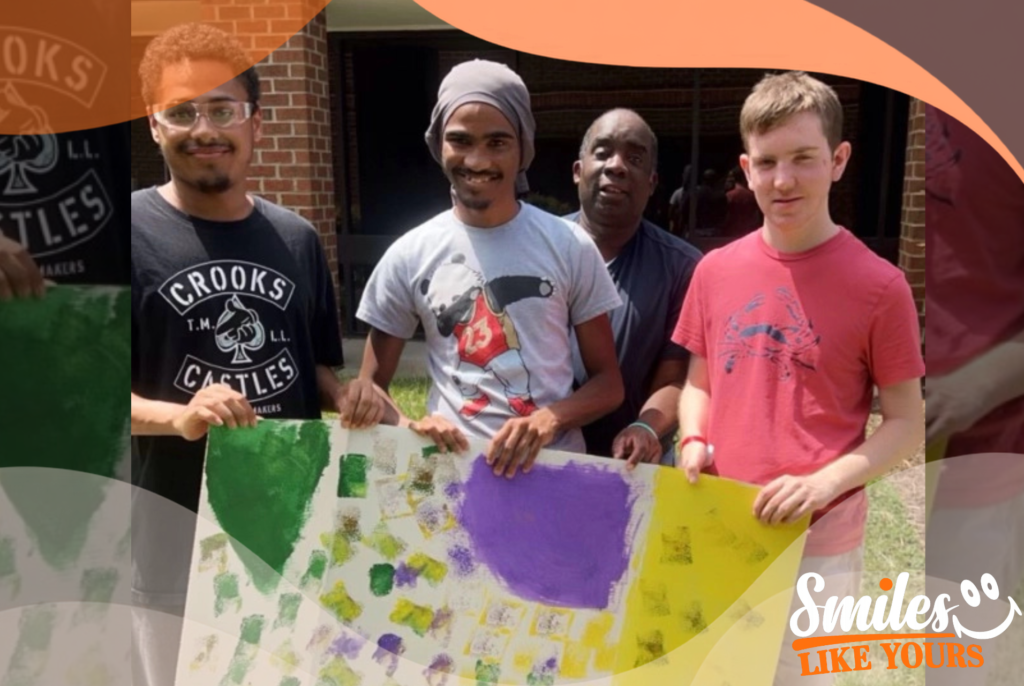
Adult day support offers structured daytime opportunities for adults with developmental disabilities. Depending on the provider and the person’s plan, the day may include center-based activities, community outings, life-skills practice, creative projects, movement, social interaction, and support with daily routines.
Virginia Medicaid uses the term Group Day Services for an authorized DD Waiver service designed to help a person acquire, retain, or improve skills related to self-help, socialization, community integration, career planning, and adaptation. The state’s DD Waiver Provider Manual explains that these services are typically offered in a non-residential setting and must reflect the individual’s age, abilities, personal preferences, and Plan for Supports.
Providers may use different public-facing program names, so families should not assume that every “adult day program” has the same service definition, funding arrangement, schedule, or level of support. Ask the provider and Support Coordinator to explain exactly what is being offered and how it relates to the individual’s approved plan.
At Smiles Like Yours, Adult Day Support is presented as a welcoming, structured program where members can:
- Build friendships and practice social skills
- Learn and maintain practical life skills
- Participate in meaningful center-based activities
- Enjoy group outings and recreation
- Develop confidence and independence
- Follow a supportive and predictable daily routine
SLY currently describes Adult Day Support as available Monday through Friday, from 7:00 AM to 4:00 PM, year-round. Families should confirm current schedules, locations, transportation, openings, and eligibility directly with the team.
What Is Community Engagement?
Community engagement uses naturally occurring community settings as the primary environment for learning, participation, relationship-building, and greater independence.
Virginia’s DD Waiver Provider Manual describes Community Engagement as an individualized, non-center-based service. Activities should take place in integrated community settings, reflect the person’s interests and choices, include skill-building, and help develop relationships and natural supports beyond paid staff.
Depending on the individual’s goals, community engagement may involve:
- Attending local events or educational activities
- Exploring museums, parks, libraries, stores, and recreational spaces
- Volunteering with community organizations
- Practicing communication and self-advocacy
- Learning to use community resources
- Building shopping, budgeting, navigation, or safety skills
- Developing hobbies and interests in inclusive settings
- Meeting people who share similar interests
- Practicing decision-making in real-life situations
At Smiles Like Yours, Community Engagement is designed for adults who want to spend substantial time participating in community life. The SLY services page describes outings, local events, volunteering, personal growth, independence, and new relationships as central parts of the program. It is currently listed as available seven days a week, from 8:00 AM to 4:00 PM, year-round.
Adult Day Support vs. Community Engagement in Virginia: Key Differences
The following comparison provides a practical starting point. Individual plans and provider practices may vary.
| Area | Adult Day Support | Community Engagement |
|---|---|---|
| Primary setting | A program location combined with selected outings and community activities | Integrated community locations rather than a center-based routine |
| Daily structure | Often more predictable and centered around a recurring group schedule | Often changes according to the person’s goals, interests, destinations, and community opportunities |
| Main emphasis | Group participation, social connection, skill-building, meaningful activities, and routine | Community participation, real-world learning, relationships, natural supports, and independence |
| Social experience | Regular interaction with peers and staff in a familiar program community | Interaction with community members, organizations, volunteers, businesses, and others who share an interest |
| Activities | Creative projects, games, wellness, life skills, group discussions, recreation, and outings | Volunteering, public events, education, errands, recreation, advocacy, and exploration of community resources |
| Predictability | May be helpful for people who appreciate a consistent base and familiar routine | May appeal to people who enjoy changing environments and frequent community participation |
| Planning | Activities should connect to the person’s goals, preferences, and support needs | Destinations and experiences should be individualized and tied to meaningful community outcomes |
This table is not an eligibility tool. A person’s Support Coordinator and provider must confirm the applicable service definition, authorization, schedule, staffing, transportation, and Plan for Supports.
Who May Prefer Adult Day Support?
Adult day support may be a strong option for someone who enjoys familiar people, a consistent location, recurring activities, and a structured group rhythm.
It may be worth exploring when the person:
- Wants regular opportunities to see familiar peers
- Benefits from a predictable arrival, activity, meal, and departure routine
- Enjoys arts, games, cooking, movement, music, or collaborative projects
- Wants to practice communication and social skills in a consistent group
- Needs a supportive base while gradually becoming more comfortable with outings
- Prefers a balance of center-based activities and selected community experiences
- Benefits from visual schedules, repetition, or gradual transitions
Structure should not eliminate choice. A quality program still asks what the person wants to do, adapts activities, respects requests for breaks, and connects the schedule with personally meaningful goals.
Who May Prefer Community Engagement?
Community engagement may be a strong option for someone who wants the community itself to be the main place where the day unfolds.
It may be worth exploring when the person:
- Enjoys visiting different places and trying new experiences
- Wants to volunteer or become involved with local organizations
- Has goals related to navigating stores, parks, libraries, or public spaces
- Wants to build relationships beyond a program setting
- Learns best by practicing skills in the environments where they will be used
- Wants greater confidence making choices in the community
- Is interested in hobbies, events, recreation, or educational opportunities alongside other community members
Community engagement should be more than taking a van ride or being physically present at a destination. The experience should connect to the person’s interests, participation, relationships, learning, and growing independence.
Can Someone Participate in Both Programs?
Potentially, yes. A person may value the consistency and friendships of adult day support while also benefiting from individualized community experiences.
Virginia’s waiver guidance recognizes that certain day services can be used in combination when they are included in the person’s plan, meet service requirements, and receive the necessary authorization. However, services cannot simply be duplicated or billed for the same time. The combination must make sense for the individual’s goals and approved schedule.
For example, a person might benefit from:
- Structured group activities on some days and community-based volunteering on others
- A consistent social program combined with practice using specific community resources
- Center-based skill preparation followed by real-world application
- A gradual transition toward spending more time in integrated community settings
Families should ask the Support Coordinator what combinations may be available, what documentation is required, and how each service supports a distinct outcome.
Compare Programs by Outcomes, Not Just Activities
Two programs can list similar activities but use them in very different ways. A trip to a grocery store could be recreation, an errand, a social opportunity, or a carefully planned way to practice budgeting, communication, navigation, and decision-making.
Before choosing a program, ask what the person is expected to gain from an activity.
Useful outcomes may include:
- Making choices with less prompting
- Communicating preferences and asking for assistance
- Building or maintaining friendships
- Learning how to navigate a familiar community location
- Participating in a volunteer role
- Practicing personal safety
- Managing money or completing a purchase
- Developing a preferred wellness routine
- Increasing comfort in new environments
- Identifying hobbies, interests, or future employment goals
Attendance alone is not a meaningful outcome. The strongest plan explains why each experience matters to the individual and how staff will recognize progress.
Consider Sensory, Communication, Mobility, and Health Needs
The setting that looks most exciting on paper may not be the most comfortable or accessible in practice. Families should consider how each option responds to the person’s full support needs.
Ask about:
- Physical accessibility at the program and community destinations
- Accessible transportation and time spent traveling
- Communication devices, visual schedules, and other supports
- Noise, crowds, lighting, weather, and sensory demands
- Medication or health-related support during program hours
- Restrooms, meals, hydration, and quiet breaks
- Support during unexpected schedule changes
- Behavioral, emotional, or safety planning
- How the person can decline an activity or request a different option
Virginia’s HCBS requirements emphasize dignity, autonomy, community access, individual choice, and freedom from unnecessary restriction. These principles should remain visible whether services are delivered at a program location or throughout the community.
12 Questions Families Should Ask Before Choosing
Bring these questions to a tour, assessment, or planning meeting:
- What does a typical week look like in this program?
- How much time is usually spent at the program location and in the community?
- How are activities and destinations connected to the person’s Individual Support Plan?
- How does the participant choose activities or decline an option?
- What communication, mobility, sensory, behavioral, or health supports are available?
- How are transportation routes, travel times, and schedule changes handled?
- How do staff support relationships with people other than paid staff?
- What happens when weather, closures, or unexpected events change the plan?
- How do you measure progress beyond attendance?
- Can the person explore both adult day support and community engagement?
- Which referral, waiver, authorization, assessment, and intake steps apply?
- How will the individual, family, provider, and Support Coordinator communicate?
Whenever possible, include the prospective participant in tours and decisions. Ask what they enjoyed, what felt uncomfortable, which environment they preferred, and what they would like to try again.
Adult Day Support and Community Engagement at Smiles Like Yours
Smiles Like Yours provides Adult Day Support and Community Engagement for adults with developmental disabilities in Richmond and surrounding Central Virginia communities.
The two SLY options have different daily emphasis:
- Adult Day Support: a welcoming social program with structured activities, life-skills development, friendships, recreation, and community outings.
- Community Engagement: community-centered days built around local destinations, events, volunteering, real-world experiences, independence, and new relationships.
Families can review the current SLY programs, explore locations, and view upcoming activities on the events calendar.
The SLY enrollment process begins with a tour. After a family explores the program and discusses potential fit, a Support Coordinator can submit a referral when applicable. The process may then include an initial assessment, admissions, and intake. Availability, eligibility, authorization, funding, transportation, and start dates must be confirmed for each person.
Frequently Asked Questions
Is adult day support the same as Community Engagement in Virginia?
No. Although both may support skills, relationships, choice, and community participation, they are not interchangeable service models. Adult day support commonly includes a program-based routine with group activities and outings. Virginia defines Community Engagement as an individualized, non-center-based service delivered in integrated community settings.
Does adult day support include community outings?
It can. SLY’s Adult Day Support includes both center-based activities and community outings. The amount, purpose, schedule, and funding of outings vary by provider and by the person’s plan.
Is Community Engagement just recreation?
No. Enjoyment is valuable, but Virginia’s service definition requires skill-building and meaningful participation. Activities should support individualized goals such as communication, relationships, self-advocacy, volunteering, community navigation, or greater independence.
Can a person use both Adult Day Support and Community Engagement?
Some individuals may receive a combination when it is appropriate, included in the plan, and properly authorized. Ask the person’s Support Coordinator to explain applicable requirements, limits, scheduling, and funding.
Are these services covered by a Virginia DD Waiver?
Virginia’s DD Waiver system includes Group Day Services and Community Engagement among its employment and day options. Eligibility for a waiver does not automatically authorize every service. The individual’s assessment, waiver, plan, service need, provider, and authorization requirements must be reviewed. Virginia currently administers the Building Independence, Family and Individual Supports, and Community Living waivers. Families can learn more on the Virginia Medicaid DD Waivers page.
How do we know which SLY program is the better fit?
Begin with the adult’s preferred routine, goals, interests, support needs, and comfort in different settings. Schedule a tour, ask how a typical week works, discuss transportation and accessibility, and involve the person’s Support Coordinator before making a service decision.
Choose the Program That Supports the Person’s Real Life
The decision between adult day support and community engagement should not be based only on which calendar looks busier or which location is closer. It should begin with the adult’s vision for a meaningful day.
Some people thrive with a familiar program community, structured activities, and consistent friendships. Others want to spend most of their time exploring local places, volunteering, developing natural relationships, and practicing independence in real settings. Many people value elements of both.
If your family is comparing adult day support vs. community engagement in Virginia, schedule a tour with Smiles Like Yours. Meet the team, explore the environment, discuss the person’s goals, and involve the Support Coordinator in determining which service and referral pathway may be appropriate.
This article provides general educational information and is not legal, medical, financial, eligibility, funding, authorization, or case-specific advice. Service definitions, waiver policies, schedules, locations, transportation, availability, and program requirements may change. Confirm current information with Virginia Medicaid, DBHDS, the individual’s Support Coordinator, and Smiles Like Yours.