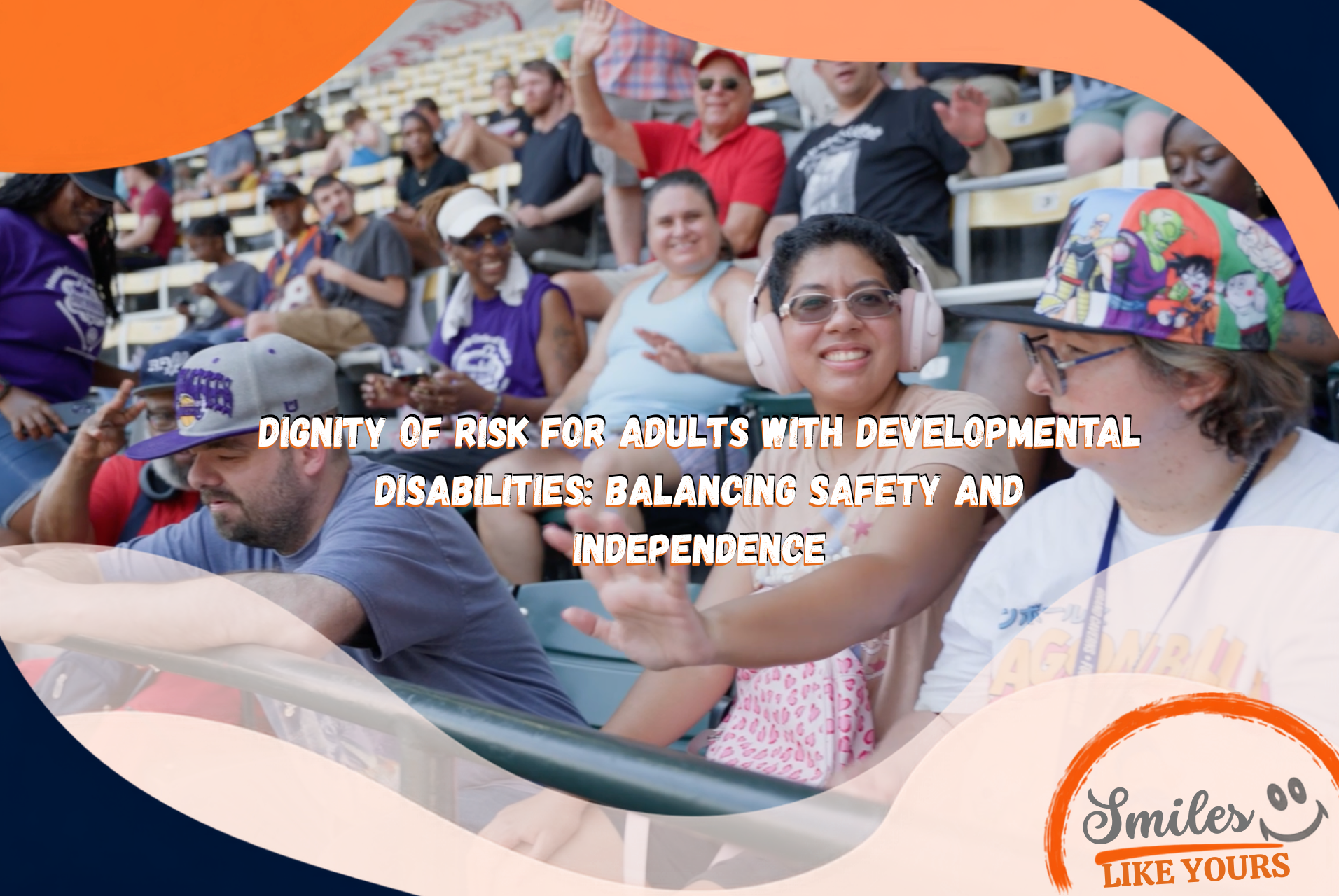
Community outings for adults with disabilities can create opportunities for friendship, confidence, independence, and meaningful participation. However, unfamiliar places, crowded spaces, schedule changes, or sensory stimulation may also make an outing feel challenging.
With thoughtful preparation, families and caregivers can make social events more comfortable and enjoyable. More importantly, the right support allows each person to participate in a way that respects their choices, communication style, interests, and individual needs.
At Smiles Like Yours, community participation is an important part of helping adults with developmental disabilities build meaningful routines and stronger connections.
Why Community Outings for Adults with Disabilities Matter

Community outings offer much more than a change of scenery. They allow adults with developmental disabilities to practice social skills, explore new interests, make decisions, and become more familiar with everyday community settings.
The CDC explains that disability inclusion means involving people with disabilities in everyday activities and supporting participation in roles similar to those of their peers. Therefore, accessible community experiences are an important part of genuine inclusion.
Outings may include:
- Visiting a park or library
- Going out for lunch
- Attending a local event
- Exploring a museum
- Shopping for personal items
- Joining a recreational activity
- Visiting a farmers market
- Participating in a volunteer project
Even a simple outing can support communication, independence, and confidence.
Begin with the Person, Not the Activity
Before planning an outing, consider the individual’s preferences. Some adults enjoy lively group settings, while others feel more comfortable in quieter environments.
Start by asking simple questions:
- Where would you like to go?
- Would you prefer a small group?
- What activities make you feel comfortable?
- Would you like to see pictures of the location first?
- How long would you like to stay?
When possible, offer two or three clear choices. As a result, the individual becomes part of the planning process rather than simply being told what will happen.
Person-centered planning also reflects a broader principle supported by the Administration for Community Living: people with disabilities should be able to make choices and participate fully in their communities.
Use Simple Planning to Reduce Anxiety
Unexpected changes can make an outing stressful. For that reason, providing information ahead of time can make the experience feel more predictable.
Before leaving, explain:
- Where the group is going
- Who will be there
- How transportation will work
- What activities are planned
- How long the outing may last
- What happens after the outing
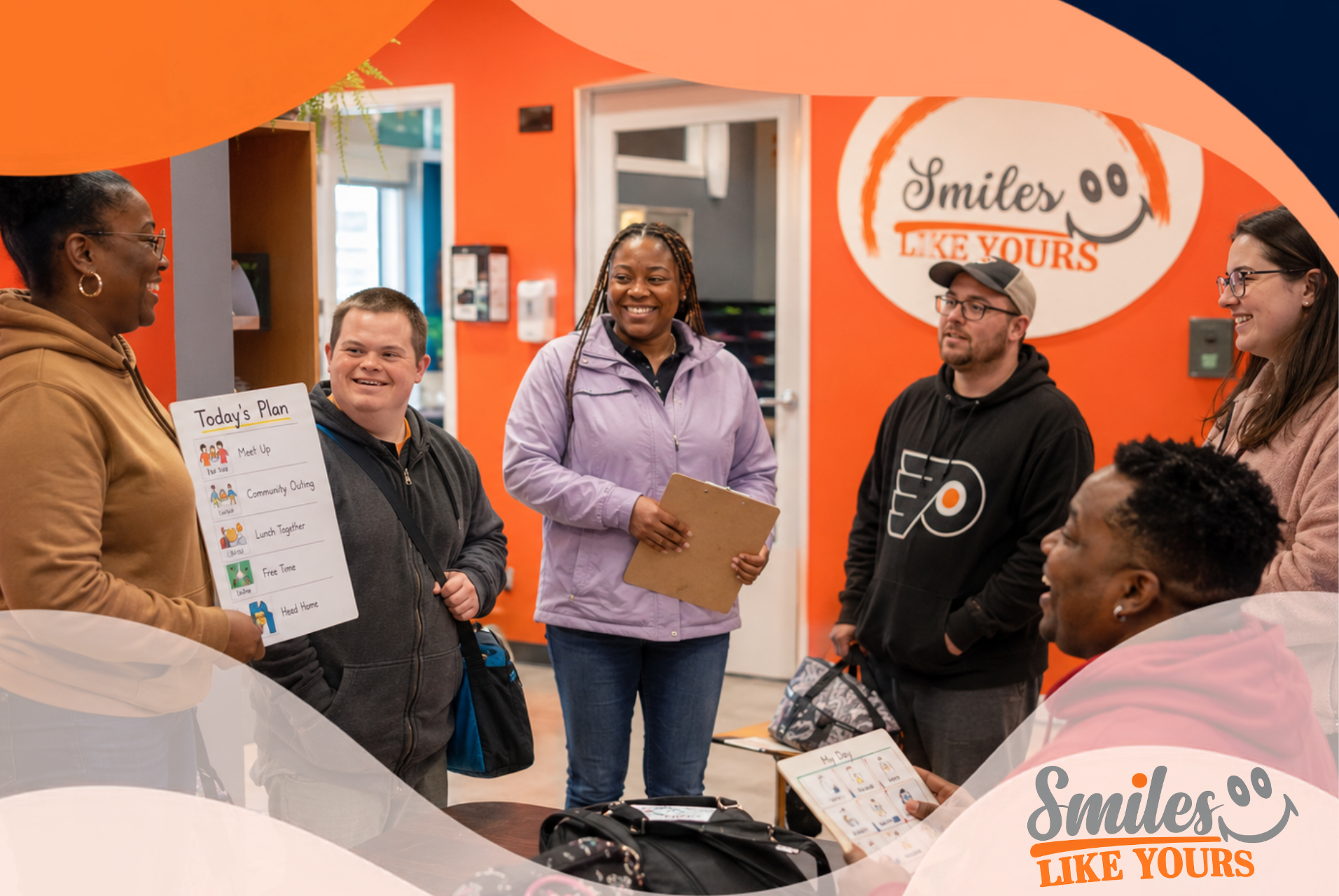
A visual schedule, short checklist, map, or photo of the destination may also help. In addition, caregivers can review the plan shortly before departure without overwhelming the individual with too many details.
It is also helpful to prepare a backup plan. For example, identify a quiet area, shorter route, or early exit option in case the environment becomes uncomfortable.
Practice Social Skills Before the Outing
Social situations often become easier with practice. Before an event, caregivers can review a few useful skills in a relaxed setting.
Practice may include:
- Greeting another person
- Ordering food
- Asking for help
- Waiting in line
- Paying for an item
- Taking turns
- Expressing discomfort
- Requesting a break
Role-playing can make these situations feel more familiar. However, the goal is not to create a perfect performance. Instead, practice should help the person communicate more confidently and understand what to expect.
Families exploring structured opportunities can learn more about adult day programs for adults with developmental disabilities in Richmond, VA. Smiles Like Yours programs combine skill-building, friendships, and meaningful experiences in the community.
Choose Accessible and Supportive Environments
Accessibility includes more than ramps and wide entrances. A supportive environment should also consider communication, sensory needs, seating, transportation, restrooms, and the pace of the activity.
Before choosing a location, consider:
- Is the entrance physically accessible?
- Are accessible restrooms available?
- Is there a quiet space?
- Will loud music or bright lighting be present?
- Is seating available?
- Can the visit be shortened if necessary?
- Are staff members welcoming and patient?
The CDC notes that barriers to inclusion can be physical or nonphysical. These barriers may limit participation and negatively affect daily life. Therefore, checking the environment beforehand can prevent unnecessary stress.
Prepare a Simple Support Kit
A small support kit can make community outings for adults with disabilities more comfortable.
Depending on the person’s needs, it may include:
- Water and a snack
- Headphones or ear protection
- Communication cards
- A phone or tablet
- Medication, when appropriate
- A comfort item
- A written schedule
- Emergency contact information
- Sensory tools
Keep the kit practical and easy to carry. Most importantly, involve the individual in deciding what should be included.
Allow Breaks and Flexible Participation
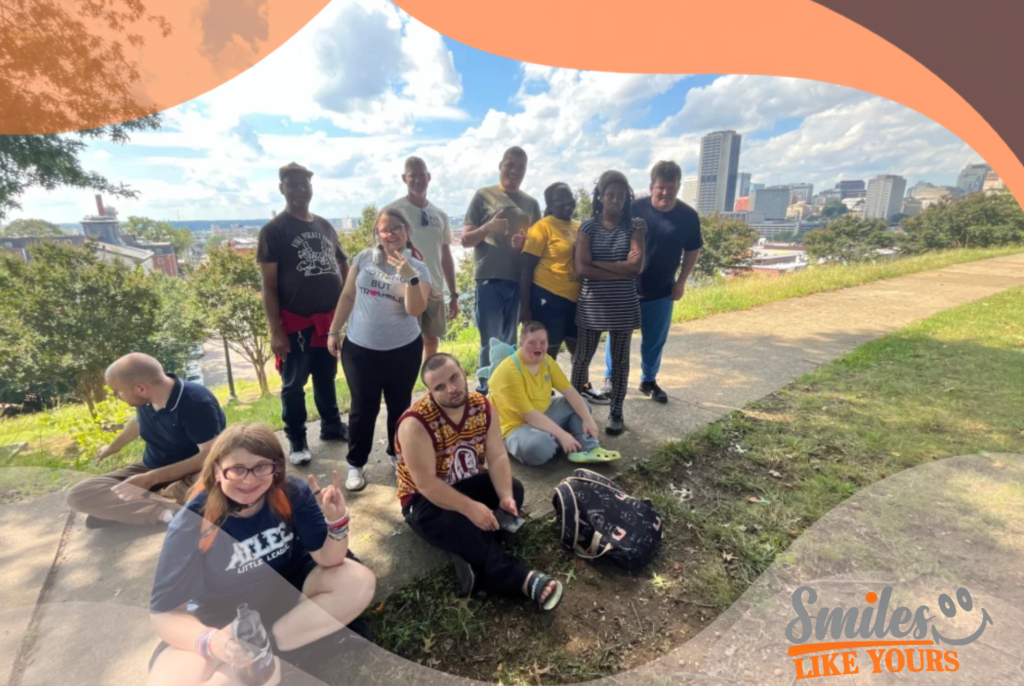
Not every successful outing needs to last several hours. Sometimes, participating for 30 minutes is a meaningful achievement.
Watch for signs that the person may need a break, such as:
- Becoming unusually quiet
- Repeating questions
- Covering the ears
- Pacing
- Showing frustration
- Asking to leave
- Withdrawing from the group
When these signs appear, offer a break without making the person feel that they have failed. Flexibility supports trust and can make future outings feel safer.
How Day Programs Support Community Outings
A structured day program can help adults prepare for community activities through regular practice, familiar staff support, and small-group experiences.
Programs may help participants:
- Practice communication
- Learn community safety
- Become comfortable with transportation
- Make choices about activities
- Build friendships
- Explore local places
- Reflect on the experience afterward
Virginia DBHDS states that people with developmental disabilities should have access to quality support and services when and where they need them. Community-based experiences can be an important part of that support.
Families can also explore Smiles Like Yours community engagement and adult day support services, which are designed to support confidence, independence, and meaningful participation.
How Smiles Like Yours Builds Community Confidence
At Smiles Like Yours, community outings are not treated as isolated events. Instead, they are part of a broader approach to building life skills, friendships, choice, and confidence.
Adults can participate in activities connected to their interests and goals while receiving support from staff who understand their needs. Over time, familiar routines and positive experiences can help participants feel more comfortable in new environments.
Families can view real examples of community outings with Smiles Like Yours, including group activities, recreation, creative experiences, and conversations that reflect what community connection looks like in everyday life.
Frequently Asked Questions
Why are community outings important for adults with disabilities?
They provide opportunities to practice communication, build confidence, develop independence, form friendships, and participate more fully in community life.
How can caregivers reduce anxiety before an outing?
Explain the plan, use visual supports, review the schedule, offer choices, and identify a quiet space or backup plan.
What makes a community activity accessible?
Accessibility may include physical access, clear communication, sensory considerations, transportation, seating, accessible restrooms, and flexible participation.
What should caregivers bring on an outing?
Useful items may include water, snacks, communication tools, headphones, medication, sensory items, emergency information, and a simple schedule.
Does Smiles Like Yours organize community outings?
Smiles Like Yours provides adult day support and community engagement programs that include structured activities, skill-building, friendships, and meaningful experiences in the community.
Take the Next Step
Community outings for adults with disabilities can become meaningful opportunities for growth when they are planned around the individual.
Start with personal interests, provide clear information, choose supportive environments, and allow flexible participation. With patience and the right support, each outing can help build confidence, independence, and connection.
Families looking for community engagement or adult day support in Richmond can contact Smiles Like Yours to learn more and schedule a first tour.